


Why Bogg is moving away from its signature EVA beach bag
Bogg is diversifying beyond the beach as it works to win over commuters, athletes and travelers.
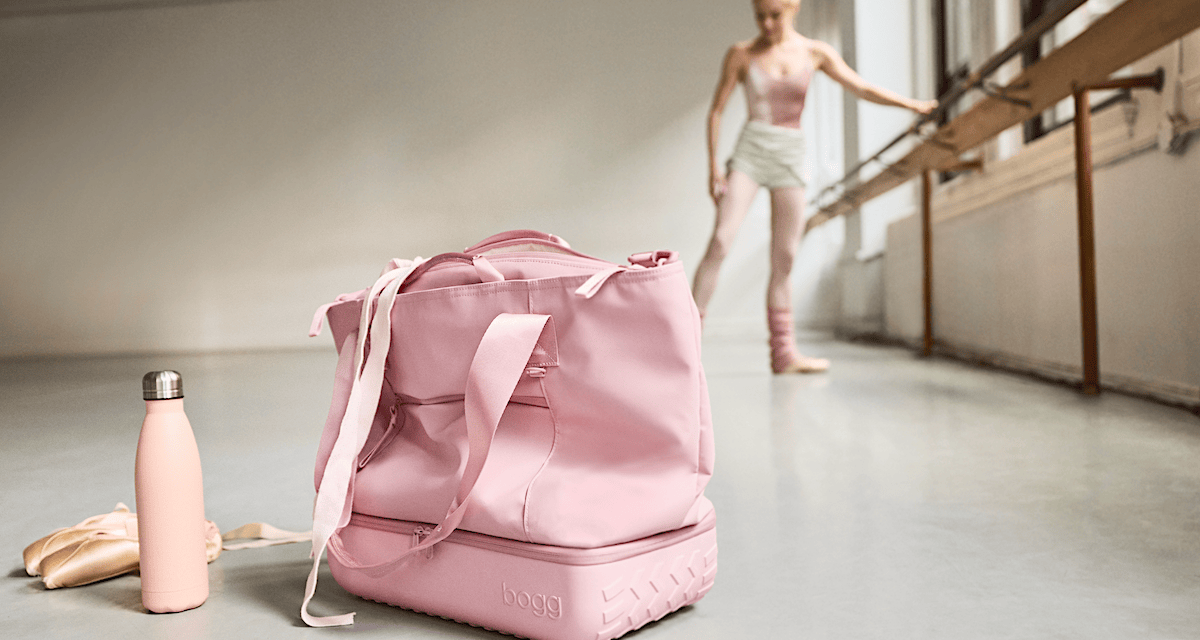
The brand, known for its colorful and washable totes, is debuting a new bag this month called the Go Tote. Developed from customer feedback, the Go Tote comes with a zippable top, a crossbody strap and a laptop pocket. The bag is made out of a soft-touch material, with an EVA foam rubber base. The Go Tote comes in three sizes retailing for $90, $120 and $150, respectively.
The innovation comes at a time of growth for Bogg, which was founded in 2008 and relaunched in 2013. The company has earned a cult-like following in the last few years, largely thanks to social media, and has surpassed $400 million in lifetime sales. Bogg is now on track for record revenue in 2026; approximately 40% of its sales come from retail partners, with the remaining 60% from DTC and Amazon. Bogg sold 2.2 million bags in 2025. In July, it entered Urban Outfitters and Anthropologie, bringing the total number of U.S. locations where customers can find its products to more than 7,000.
Historically, Bogg’s hero product has been a spacious EVA tote that stands upright and wipes clean. Customers tend to take it to the beach, pool or park and use it to hold sunscreen, towels and snacks. But the product has an open top, which may not appeal to those looking for something more secure. The Go Tote, meanwhile, has a zipper closure and plenty of interior and exterior pockets.
Bogg hopes that the Go Tote will appeal to new customers, as well as existing customers looking for something a bit different, said founder and CEO Kim Vaccarella. “We’ve taken everything you love about Bogg bag and put it into a bag that you can travel with,” she said. Vaccarella added that customers want to carry Bogg “in everyday life.” “This is our solution to that.”
The Go Tote — designed for workdays, weekends and workouts — has a sturdy bottom and sturdy sides, but it can also flex and fold, Vaccarella said. It can be carried in multiple ways, including via top handles, and has pockets for a phone and a water bottle. The largest size, at 35L, slides over a suitcase handle and has a zippable base to store anything the user would like to keep separate. “You could put dirty shoes, muddy cleats, anything you want down there, and you can just wipe it out when you’re done,” Vaccarella said.
This isn’t Bogg’s first go-around with softer materials; a few years ago, it launched a backpack and a tote bag. But these were made out of canvas and didn’t have the “durability and ruggedness” Vaccarella wanted out of a product. Bogg went back to the drawing board, asking customers in surveys and on its Facebook page what they’d like to see next. A zipper top was a natural progression, especially as Bogg has gone more into accessories like bag toppers and cup holders, Vaccarella said.
All sizes of the Go Tote come in four colors: Cafe Au Lait, Blush-Worthy, L.B.D Black and Plum Pudding. The smallest size (6L) also comes in Coconut and Parisian Purple. While the Go Tote is debuting now, Bogg is already moving ahead on versions for 2027. “We’re going to go into some color pops for spring,” Vaccarella said.
Until then, Bogg is trying to make sure that the Go Tote’s different use cases, like “gym bag” or “travel bag,” get picked up by AI engines like ChatGPT. It’s updating its product descriptions online to optimize for GEO and using the same messaging across its marketing.
“We need to be consistent in our verbiage across all channels, … because consistency is going to rise to the top,” Vaccarella said. “If we’re talking about using the Go Tote, that it’s a commuter bag, everything needs to say ‘commuter.'”
Also on the marketing front, Bogg is dispatching 75 brand ambassadors, with Go Totes in hand, through the halls of New York City’s Grand Central Station. The ambassadors will then break out into groups and head to Bryant Park, Times Square and Penn Station to shoot social content. Bogg is also putting up 1,500 wheatpasted ads throughout the area.
It hasn’t been an easy journey developing the Go Tote, Vaccarella said. Bogg took a nearly $10 million hit from tariffs last year. Until recently, it manufactured all of its products in China, one of the most heavily tariffed countries under U.S. President Donald Trump’s administration. EVA foam rubber, like other plastics, has also been sensitive to global supply constraints and price spikes amid the recent closure of the Strait of Hormuz.
Bogg ended up working with factories in Vietnam and Cambodia to create the Go Tote and dye the materials in certain colors. However, “everything [price-wise] was through the roof, and materials were hard to come by,” Vaccarella said.
The tote’s lead time also stretched out, due to complications like tropical storms, increased competition in Vietnam and restrained capacity in the Panama Canal. In fact, Bogg planned to launch the Go Tote in September but pushed it back to October. “Just when you feel like you can catch a break, you can’t,” Vaccarella said.
Still, she stressed that Bogg didn’t change the price of the Go Tote. It now plans to make further iterations down the road, based on what else customers want from a zip-top bag. “Now, it’s [about] listening to the second round [of feedback],” Vaccarella said.